The Enduring Charm of Handwritten Typography in Digital Design
There's a certain magic in a handwritten note. In a world saturated with crisp, uniform digital text, the slight imperfections, the flow of ink, and the personal touch of a human hand convey warmth and authenticity that fonts like Times New Roman simply cannot replicate. This desire for a personal connection has fueled a massive trend in design, moving away from sterile minimalism towards more organic, heartfelt aesthetics. The challenge, however, has always been efficiency. How do you achieve that bespoke, hand-lettered look without spending hours with a calligraphy pen or hiring an expensive artist for every project?
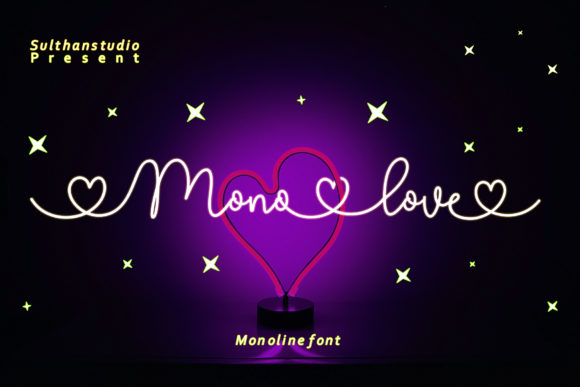
The answer lies in the evolution of font design. Modern script fonts are no longer just static sets of letters. They are sophisticated digital tools engineered to mimic the fluidity and nuance of real handwriting. A prime example of this innovation is a typeface like Mono Love. It’s not merely a collection of characters; it’s a design system built for versatility and ease, capturing the essence of a sweet, personal script while being fully functional in a digital workflow. It represents the bridge between the desire for a personal touch and the practical demands of modern design.
Deconstructing the Anatomy of a Modern Script Font
What separates a truly effective handwritten font from a clumsy, amateurish one? It’s all in the details. The best script fonts are crafted with an understanding of typographic principles and the natural flow of cursive writing. They avoid looking repetitive or robotic, a common pitfall where every letter 'a' or 'e' is an identical clone. Instead, they incorporate features that introduce variety and life into the text.
Key characteristics to look for include a varying baseline. In natural handwriting, words don't sit perfectly on a straight, invisible line. They dip and rise slightly, creating a gentle, undulating rhythm. This subtle detail is crucial for realism. Another hallmark is smooth lines and connections. The way letters link together should feel effortless, without awkward kinks or breaks that disrupt the reading flow. A font like Mono Love excels here, with its carefully designed connections that ensure legibility while maintaining a fluid, handwritten feel.
Furthermore, the availability of stunning alternates and swashes is a game-changer. These are different versions of the same letter that can be swapped in to avoid repetition. For instance, you might have three different ways to write a lowercase 'h' or a capital 'M'. This allows a designer to customize the look of a headline or logo, making it feel truly one-of-a-kind. The ability to easily access these glyphs is what elevates a font from good to exceptional.
The Power of Accessibility: PUA Encoding Explained
This brings us to a critical, yet often overlooked, technical feature: PUA encoding. PUA stands for Private Use Area. In simple terms, it’s a block of the Unicode standard that is reserved for custom symbols and characters not found in standard fonts. For a script font loaded with alternates, ligatures, and decorative swashes, PUA encoding is the key that unlocks its full potential.
Without proper encoding, those beautiful alternate characters might be trapped inside the font file, inaccessible without complex software or workarounds. A PUA-encoded font like Mono Love, however, ensures that every single glyph can be accessed directly through standard applications. Whether you’re using Adobe Illustrator, Photoshop, Canva, Procreate, or even Microsoft Word, you can simply select the character from a glyph panel and drop it into your design. This democratizes advanced typography, putting professional-grade tools into the hands of everyone from seasoned designers to small business owners crafting their own marketing materials.
Practical Applications: Where Does a Font Like Mono Love Shine?
The true test of a font is its versatility. A design asset is only as good as its ability to solve problems and enhance projects across different contexts. A sweet, handwritten script like Mono Love is surprisingly adaptable, bringing a human touch to a wide array of applications.
Event Stationery and Personal Touches
This is the most natural home for a beautiful script font. Think of the impact it can have on:
- Wedding Invitations: It sets a romantic and elegant tone from the very first impression. The flowing lines are perfect for names, dates, and heartfelt messages.
- Thank You Cards: A handwritten-style font makes a message of gratitude feel more sincere and personal than a standard serif or sans-serif.
- Greeting Cards and Quotes: For birthdays, holidays, or inspirational art prints, this style of font adds an immediate layer of warmth and personality.
Branding and Commercial Use
Businesses are constantly seeking ways to connect with their audience on an emotional level. A handwritten font can be a powerful tool for building a brand identity that feels approachable, authentic, and human.
- Logos: For bakeries, boutiques, cafés, photographers, or any brand that wants to emphasize craftsmanship and care, a script logo is a classic choice. Mono Love provides the elegance needed for a memorable mark.
- Business Cards and Packaging: Using it for a tagline, a name, or special callouts on packaging can make a product feel more artisanal and premium.
- Social Media Graphics: In a fast-scrolling feed, a beautiful, personal font can stop the thumb. It’s perfect for quotes, announcements, and sale graphics that need a touch of flair.
Digital and Web Design
Even in the digital realm, where clarity is paramount, a script font has its place. It can be used effectively for large hero text on a website, for section headers in a blog post, or within digital planners and worksheets to give them a more customized, journal-like feel. The key is to use it strategically for impact, not for long blocks of body text.
Making the Right Choice: Considerations for Designers and Creators
Before integrating any new font into your toolkit, it’s wise to consider a few practical factors. While a font like Mono Love is designed for broad compatibility and ease of use, thinking through these points will ensure a smooth workflow.
First, consider legibility at different sizes. A script font with beautiful, intricate swashes might look stunning as a 72-point headline but could become an unreadable mess at 10-point caption size. Test the font at the sizes you anticipate using most. Second, think about its pairing potential. A strong handwritten font needs a partner. It typically pairs best with a simple, clean sans-serif (like Montserrat or Lato) or a classic serif (like Garamond) for body text. This contrast allows the script font to stand out as a feature without overwhelming the design.
Finally, always be mindful of licensing. The terms of use can vary significantly between free and premium fonts. For any commercial project—whether it’s a client logo, a product you sell, or a website for your business—ensure the font’s license permits that type of use. Reputable font foundries and marketplaces are always clear about their licensing terms, providing peace of mind for your creative endeavors.
In the end, choosing a font is about more than just aesthetics; it’s about finding a tool that enhances your message and streamlines your process. A well-crafted, PUA-encoded script font offers the best of both worlds: the soulful, imperfect beauty of handwriting and the precision and efficiency of digital design. It allows you to add that irreplaceable personal touch, quickly and effectively, to any project that calls for a little bit of love.