Understanding Abcd Ref Stones: A Practical Guide for Educators and Parents
When searching for effective tools to teach handwriting, the sheer volume of options can be overwhelming. From traditional workbooks to digital apps, the market is saturated with resources promising to help children master the alphabet. Among these, Abcd Ref Stones has emerged as a notable resource, particularly for those focused on the foundational stages of literacy. This font family is not just a decorative typeface; it is a specialized tool designed with a specific pedagogical method in mind. For adults tasked with creating educational materials, understanding what sets Abcd Ref Stones apart is a critical step in selecting the right resource.
The Foundation: D’Nealian Method and Modern Teaching
At its core, Abcd Ref Stones is an outlined display font rooted in the D’Nealian Method, a style of teaching cursive and print handwriting that has been a staple in US schools since the late 1970s. Unlike the traditional block-style printing many adults grew up with, the D’Nealian approach introduces a slanted, slightly connected style from the outset. The goal is to ease the eventual transition to cursive writing. The Abcd Ref Stones font family is built upon this principle, offering letterforms that reflect these characteristic slants and curves.
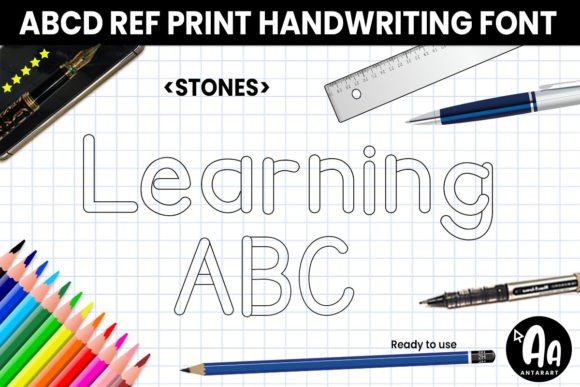
What makes Abcd Ref Stones distinct is its outlined format. This design choice transforms the font from a simple reference into an interactive learning tool. The hollow letters are perfect for creating tracing worksheets, coloring activities, and sandpaper letter guides. This hands-on approach aligns with kinesthetic learning theories, where physical engagement aids memory and skill acquisition. For a teacher or parent, this means you are not just showing a child what a letter looks like; you are inviting them to physically trace and build the letter's shape, reinforcing muscle memory and recognition simultaneously.
Comparing Abcd Ref Stones to Other Handwriting Resources
To evaluate Abcd Ref Stones fairly, it helps to compare it to broader categories of handwriting resources. Traditional printable worksheets often use solid, standard fonts. While these are useful for reference, they offer little in the way of guided practice. A child might see the letter 'a' but has no built-in support for how to form it. Abcd Ref Stones solves this by providing the path for the pencil to follow.
When compared to full, pre-packaged curriculum kits, Abcd Ref Stones offers a different kind of value. Those kits are comprehensive but often rigid and expensive. They come with a fixed sequence of lessons and materials. In contrast, Abcd Ref Stones is a flexible component. It empowers educators and parents to create their own customized worksheets tailored to a specific child's needs or a classroom's theme. If a student is struggling with the letter 'g', you can generate multiple practice sheets focusing solely on that letter, using the Abcd Ref Stones outlines for consistent, correct formation.
Digital handwriting apps present another comparison point. These tools offer immediate feedback and gamification, which can be highly engaging. However, they lack the tangible, paper-and-pencil experience that many educators believe is crucial for developing fine motor control and the sensory feedback of writing. Abcd Ref Stones exists in the physical realm, supporting the development of grip, pressure, and the direct connection between hand and paper. The best approach for many may be a blended one, using digital tools for engagement and resources like Abcd Ref Stones for deliberate, tactile practice.
Strengths, Tradeoffs, and Best-Fit Scenarios
The primary strength of Abcd Ref Stones lies in its specialization and adaptability. It excels in creating thousands of unique, printable worksheets. This is invaluable for teachers managing classrooms with diverse skill levels or parents seeking repetitive practice without monotony. The font's design ensures consistency, which is vital for learning. Every time a child encounters the letter 'b' in an Abcd Ref Stones worksheet, it will have the same slant and starting point, building reliable muscle memory.
However, there are tradeoffs to consider. The D’Nealian Method itself is not universally adopted. Some educational philosophies and school districts prefer the ball-and-stick method for initial print instruction, arguing it creates clearer distinctions between letters. If your local curriculum or personal preference aligns with a different handwriting style, Abcd Ref Stones may not be the ideal fit. It is a tool built for a specific methodological choice.
Another consideration is the requirement for preparation. Unlike an all-in-one workbook, using Abcd Ref Stones requires the user to design or at least assemble the worksheets. This demands a certain level of initiative and time from the educator or parent. For someone looking for a ready-to-use, out-of-the-box solution, this could be a drawback. Conversely, for those who enjoy crafting personalized learning experiences, this flexibility is a significant advantage.
Ideal Use Cases for Abcd Ref Stones
- Custom Worksheet Creation: Educators who need to generate differentiated materials for their class.
- Targeted Skill Reinforcement: Parents or tutors working with a child on specific letter formation challenges.
- Multisensory Learning Projects: Creating materials for activities like letter tracing in sand trays, using glue outlines for tactile letters, or designing coloring sheets that double as writing practice.
- Supplementary Practice: Adding variety and focused practice to an existing handwriting curriculum that may use a compatible slant style.
Making an Informed Decision
Choosing Abcd Ref Stones is less about choosing a product and more about choosing an approach. It is the right choice for individuals who value the D’Nealian slant style, believe in the efficacy of tracing and hands-on practice, and are willing to invest a small amount of time in creating tailored materials. It is a powerful resource for building a library of practice sheets that can grow with a student's needs.
If, however, you are committed to a strict block-print method from day one, or if you require a fully scripted, day-by-day curriculum with all materials provided, you may need to explore other options. The key is to align the tool with your educational goals and teaching style.
Ultimately, Abcd Ref Stones represents a specific and effective tool in the educator's toolkit. It bridges the gap between static reference and interactive practice. By understanding its design philosophy, its strengths in customization, and its situational tradeoffs, you can make a more informed decision about whether it is the right resource to support the learners in your life. For many, its outlined, method-specific letters will be exactly what is needed to turn alphabet learning into an engaging, tactile, and successful endeavor.